
Your people have mental health support.They're just not using it.
AI is speeding work up. It's not absorbing the strain.
Ascenda detects psychological hazards before they become burnout, attrition, or a claim.
- Check-ins shaped by the actual pressures of each role
- Continuity of care, not a blank page every time
- Psychosocial risk visibility before someone leaves or breaks


Four things changed at once.
Workplace mental health was a poster in the kitchen. Then regulation, technology, and workforce strain shifted at the same time.
Regulation has caught up
Psychosocial risk is now in Australian WHS codes of practice. You need a defensible system — not a phone number on a poster.
The current model isn't working
Most support is still reactive, generic, and episodic. Organisations fund it, people don't use it, and risk stays invisible until someone leaves or breaks.
High-strain roles need more
Healthcare, legal, emergency services, and trauma-exposed teams face specific pressures that one-size-fits-all support doesn't reach.
AI is accelerating strain, not absorbing it
75% of workers now use AI tools. Nearly half still report burnout (Microsoft, 2025). AI is outpacing human recovery — and technostress is now a measurable psychosocial risk.
Here's where Ascenda sits.
| Layer | Current State | Gap |
|---|---|---|
| Traditional EAP | Reactive | Low utilisation |
| Surveys | Periodic | Too late / too infrequent |
| Managers | Inconsistent | Not trained for detection |
| Ascenda | Continuous | Early detection + engagement |
“Detect risk before it becomes a claim. Reduce strain before it becomes attrition.”
Proactive care. Not reactive damage control.
Most workplace support waits for a crisis. Ascenda surfaces risk early, before it escalates.
Proactive Care
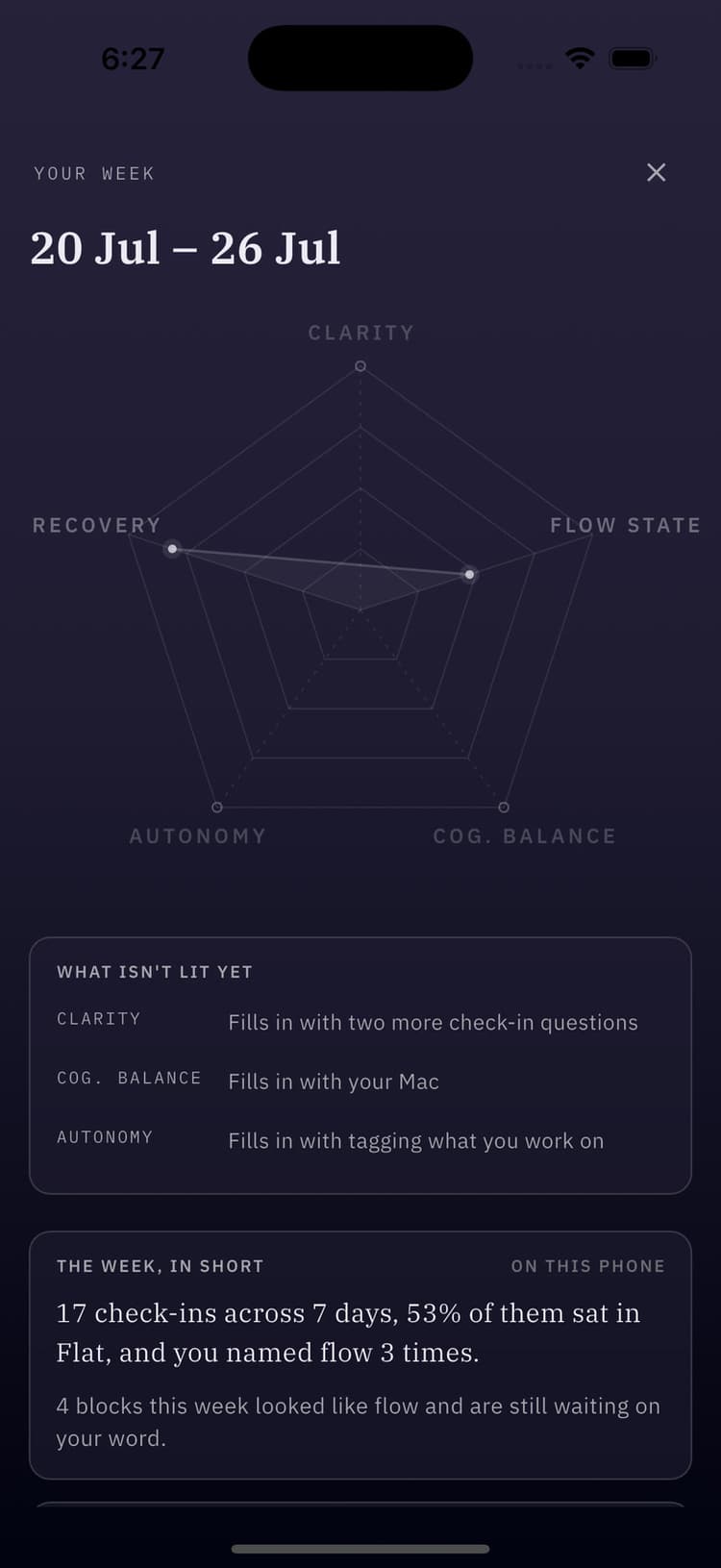
Short check-ins track mood, energy, and workload pressure. Patterns surface before someone reaches breaking point.

Guided Intervention
When risk builds, Ascenda surfaces the right next step: a self-guided activity or a session with a matching therapist.
Fast Triage
When someone needs clinical support, they're matched to the right practitioner with full context. No blank page. No starting over.

A paramedic and a lawyer shouldn't get the same check-in.
Support shaped by the reality of the job.
Your people get short, role-specific check-ins between sessions. Not generic prompts: questions shaped by the actual pressures of their work. A paramedic and a corporate lawyer experience Ascenda differently.
- Tailored to Each RoleHealthcare, legal, emergency services, and other high-strain roles each receive support that fits.
- Support Between SessionsContinuous engagement that doesn't wait for a crisis or a scheduled appointment.
- People Actually Use ItWhen support feels relevant to someone's actual work, engagement follows.
Continuity between sessions, not a blank page.
When someone needs a human, their therapist walks in with context: what's been happening, what patterns are emerging, and where the strain is building. No more starting from scratch.
- Structured HandoverPatterns, coping behaviours, and strain indicators arrive before the session.
- Continuity, Not a Blank PageNo more starting from scratch every session with a new provider.
- More Effective SessionsTherapy becomes more targeted and less time is spent on intake and catch-up.
See where risk is building. Before it surfaces.
The same system that supports your people rolls up into aggregate psychosocial risk reporting. See where strain is building across teams, roles, and sites: real data, not annual surveys.
- Team-Level InsightsDe-identified, aggregate data shows where psychosocial hazards are forming.
- Compliance You Can EvidenceDefensible documentation for psychosocial risk identification, aligned with WHS codes of practice.
- Leading, Not LaggingProactive risk signals instead of waiting for turnover, claims, or incidents.
When AI isn't enough, it connects to a human. With context.
No cold referrals. The system connects your people to the right professional, with context on what's been happening, what's emerging, and what's already been tried.
- Context-Aware TriageEscalation informed by severity, patterns, and role-specific risk thresholds.
- Warm Handover, Not a ReferralClinicians receive structured context so the person doesn't start over.
- Right Fit for the SituationPeople are connected to the type of support that matches their need, not a generic list.
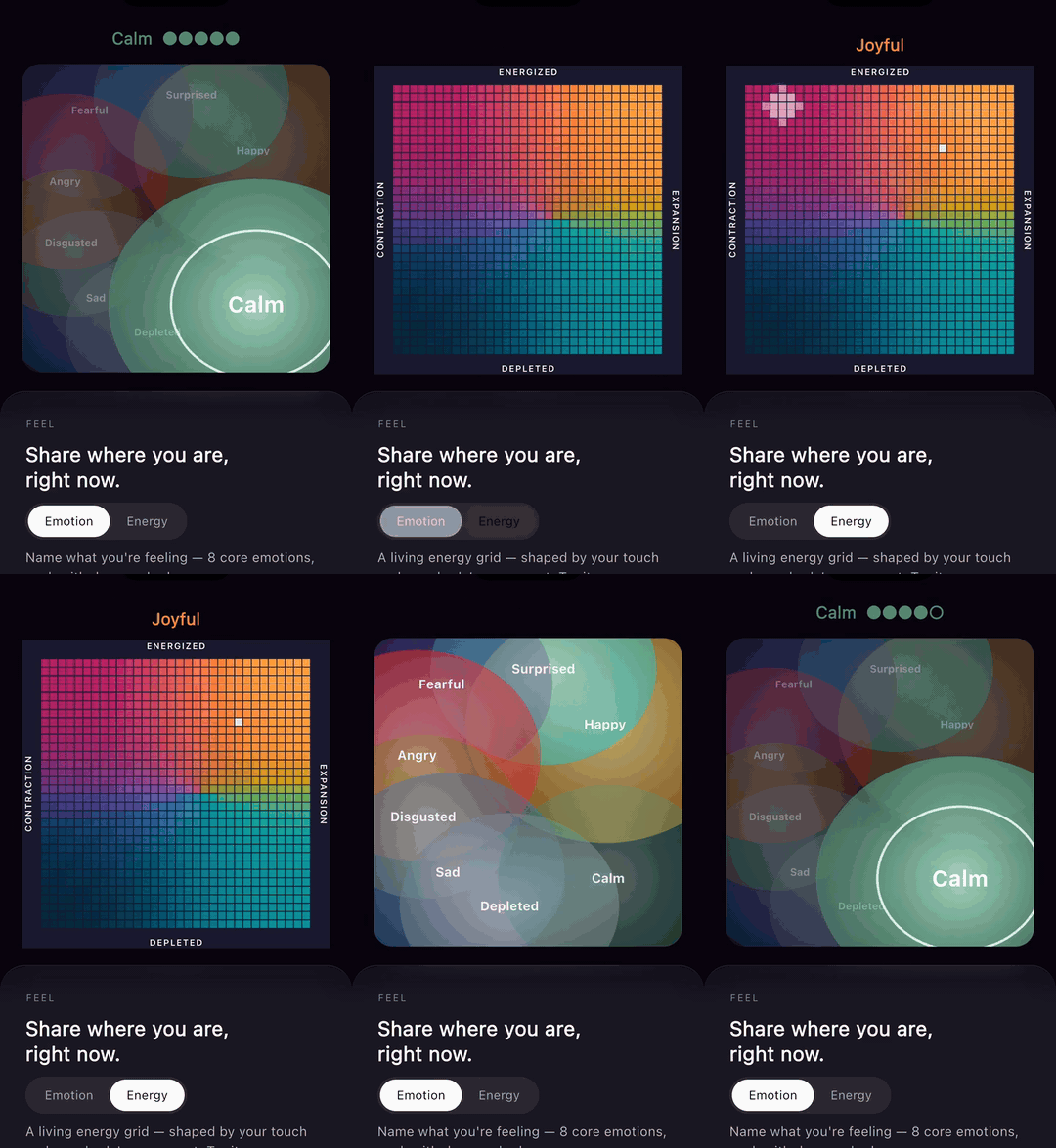
Build peak mental performance with professional-guided AI support.
Run the numbers on your current provider.
See how continuous care stacks up against what you're paying now.
Your current support isn't working
<5% utilisation means 95% of your spend is wasted.
Prevention saves leave
Early support prevents 34-week mental health absences.
Early intervention works
Microsessions reduce costly escalations by 30%.
Used to apply an indicative sector benchmark in your result.
Typical AU range: $30–$200/employee/year
Total sessions your workforce used last year
Typically 3–6 sessions per person per year
Indicative estimate only. Results rely on your inputs, benchmark assumptions, and simplified modelling and may contain inaccuracies or omissions. They are not legal, financial, actuarial, insurance, or medical advice. Any guarantee applies only under a signed agreement and applicable terms. Terms & disclaimer · legal@ascenda.one
See what changes for your teams.
We're starting where the pressure is highest: healthcare, legal, emergency services, AI-impacted teams. Talk to us.