01
AI rollout is not only a tooling project
AI transformation changes workload shape, decision pressure, trust calibration, and pace expectations. Output can rise while cognitive load rises too.

AI Adoption
Ascenda surfaces cohort-level workload strain trends early, supports people before pressure becomes burnout or attrition, and makes AI adoption sustainable for the teams carrying the work.
Throughput climbs while the experience of doing the work quietly erodes. By the time it shows up in attrition, it has been visible in the signals for months.
01
AI transformation changes workload shape, decision pressure, trust calibration, and pace expectations. Output can rise while cognitive load rises too.
02
Delivery dashboards show throughput. They do not show flow quality, supervisory burden, or narrowing recovery margin across teams.
03
Ascenda is designed around trust. Individuals get personal support; organisations get de-identified, cohort-level trend visibility and early warning signals.
12-week composite trend vs. benchmark · illustrative data
From the Overview report in the Ascenda dashboard: output holds while the composite experience score drifts from benchmark. That divergence is the productivity-experience gap. See all five reports →
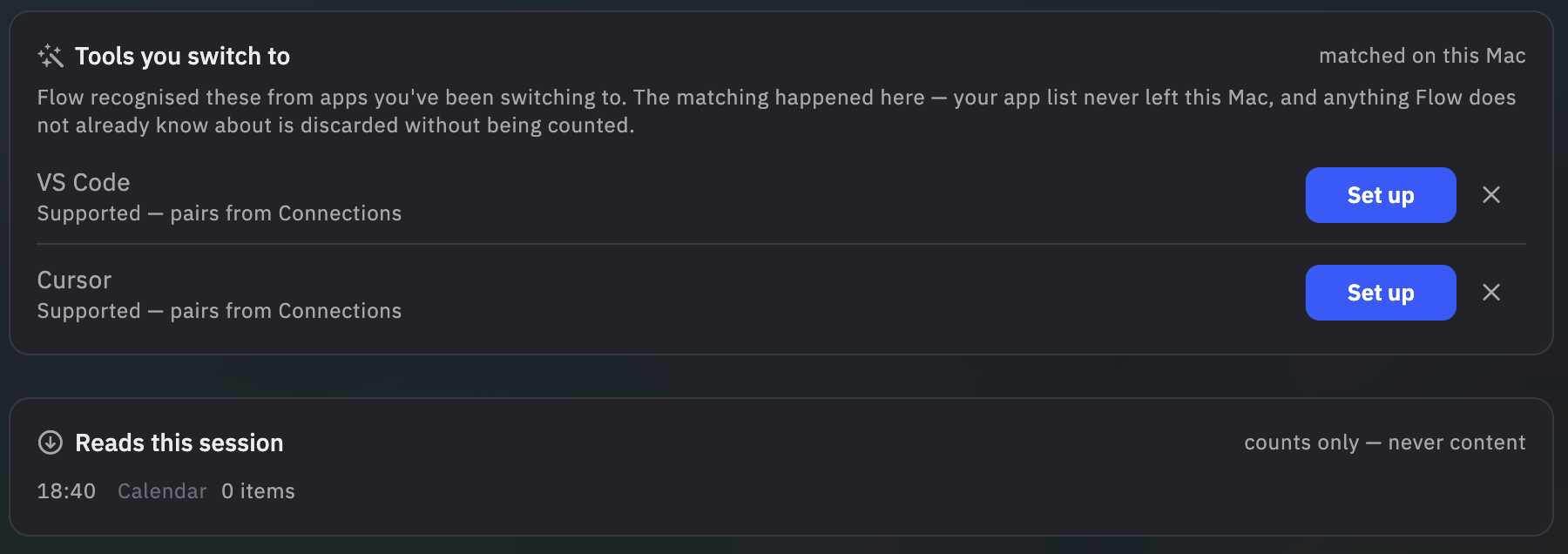
Ascenda recognises the tools someone works in so it can read workload, not content. The matching happens on their machine, the app list never leaves it, and anything unrecognised is discarded rather than counted. What was read this session is listed back to them, in the app, as counts.

Six signal families, tracked as de-identified cohort trends and read against your own baseline.
Capacity to make sound calls under AI-paced delivery.
Context switching and mental effort trending against baseline.
How often deep work is broken before it can compound.
Where directing and correcting AI concentrates on a few people.
The checking load that grows alongside AI output.
After-hours signals that narrow the room to recover.
Small enough to start quietly, structured enough to give you an evidence-based answer.
1
Consented cohorts are set up and de-identified baselines are established in the first two weeks.
2
Weekly cohort trends surface where strain is building while individuals receive private, role-aware support.
3
A clear picture of adoption health, with the highest-leverage interventions ready to act on.